Author: Mark Bolton. Collaboration: DeepSeek. Images: Sources supplied.
“The telex machine is kept so clean, and it types to a waiting world”
Bob Geldof / John Peter Moylett
Dear Carolynn
Prepare yourself for yet another thought experiment that delves into a ‘what if’ as always. Naturally, it starts with a historical footnote and unravels into a portrait of our modern world. It all began with listening to differing opinions following the recent Minneapolis Catholic church shooting, which got me thinking about reasons why, and those who will jump on board to exploit a killer’s motives for their own benefits.
The Minneapolis shooter had so many items of hatred on his hit-list. He was pretty much anti everything, none of which could pinpoint him to be considered typically left or right leaning. During the following days, we here exploitation groups jumping up and down everywhere saying, “See, this is why we need this, or need to ban that….” etc.
At the same time, there will be social media groups hailing the shooter as some sort of fallen hero. Anti Jew groups, anti Muslim groups and anti Trump groups all using this shooter for their own agendas. And his list goes on. It’s weird.
I am not going to mention his name or any other mass killing nutters. However, to explain my thought experiment, I must mention one.

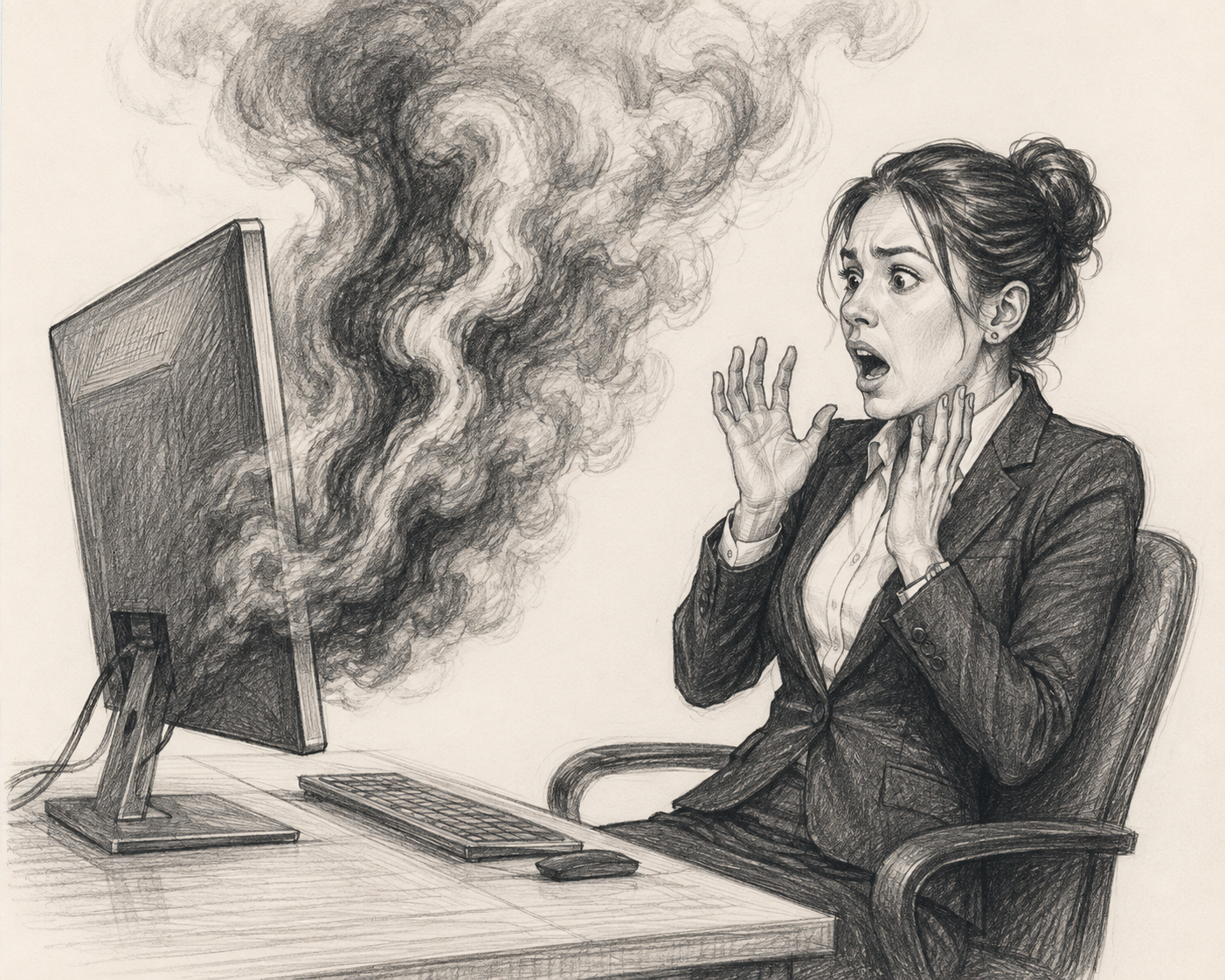
Gets switched to overload. Bob Geldof / John Peter Moylett. Image: Fotor
Brenda Spencer, in 1979 was sixteen years old. She opened fire on a San Diego elementary school, located across the road from her house. Two men were killed and eight children and a police officer were wounded. When asked why she started shooting, Spencer gave the world that infamous, nihilistic answer: “I don’t like Mondays. This livens up the day.” Later that year, The Boomtown Rats had a hit song titled, ‘I Don’t Like Mondays‘ written about Brenda and the events of that day.
It was a horror so bizarre and senseless it seemed to exist in its own isolated universe. There was no manifesto, no grand political or hateful ideology–just a deeply troubled girl and a terrifyingly vacant reason. It was a private madness that, for decades, stood as a singular, dark monument.
But my thought experiment is this: What if Brenda Spencer did her shooting today and not in 1979? Back then we lived with landline phones and there was pretty much only the six o’clock TV news (Australia), and it had to cover a days worth of stories in 30 minutes. Radio stations serviced basic news but they weren’t the shock jock formats that followed years later.
Right now, we live in the age of the perpetually connected, algorithmically-driven World Wide Web, and people cluster together inside their own global groups. In 1979, her motive was a cul-de-sac. It led nowhere. People were horrified, baffled, and the story eventually faded into true-crime archives. It was a dead end.
Today, I fear, “I don’t like Mondays” wouldn’t be an endpoint. It would be a genesis. It wouldn’t be seen as a nonsensical statement from a single disturbed individual. It would be a meme. It would be a brand–so much so that there is merch available, but luckily not so much interest. To be completely honest, I’m left questioning if I should publish this or not.
Imagine the online ecosystems that would instantly coalesce around it. #IDontLikeMondays would trend globally within hours. It would be a mix of morbid curiosity, genuine horror, and, inevitably, ironic detachment. People would post memes of grumpy cats and coffee spills alongside the news footage, blurring the line between mundane complaint and horrific violence.
The lack of a traditional hate-based motive wouldn’t be a barrier; it would be a canvas. Online communities would project their own grievances onto her. They would hail her as a “Saint Brenda,” the ultimate rejection of a society that ostracises them. Her act wouldn’t be about Mondays; it would be about the daily humiliation of life.
People with extreme mental health disorders would frame her as a violent martyr against the grind of everyday life. On platforms like TikTok, a specific, romanticised aesthetic would emerge–grainy footage, a certain type of music, a fashion style. She wouldn’t be a killer; she’d be a vibe, a symbol of pure, apathetic rebellion against the mundane.
This is the darkest part. Her “reason” is so low-barrier, so universally relatable on its surface, that it becomes dangerously accessible to other psychologically vulnerable souls. Every lonely, angry, depressed person who feels trapped by the cycle of their own life could see a twisted reflection in her.
Unlike adopting a complex racist or religious ideology, “hating Mondays” requires no homework. It requires no belief system. It’s a feeling. And feelings are contagious. We’ve seen how modern shootings create a blueprint–a “script”–for others. The Christchurch shooter explicitly referenced others, creating a chain. Brenda Spencer’s script would be the simplest and most terrifying of all: You don’t need a reason. Any reason will do. No reason is enough.
So, to answer my own grim question: How many might follow?
I think the number would be greater than we’d ever want to believe. Not because today creates more Brendas, but because today’s digital world is a monumental force multiplier for her specific brand of emptiness. It would transform a private scream into a public chorus.
The tragedies we see now are often fueled by specific, hateful toxins that seep through online sewers. What terrifies me about the thought of a modern Brenda Spencer is the idea of a violence fuelled by nothingness–and how the internet, in its endless hunger for content, would eagerly fill that void with a thousand reasons, making it accessible to a thousand more lost souls.
It makes the old horror feel almost quaint. And that is a truly frightening thought.
We can’t go backwards without returning to cave dwelling societies, but we can still be human and humane to ourselves. Life goes on while we have life, and from that, as I always say, live your life today like it could be your last. Enjoy what you have, don’t focus on what you don’t have. Smile at people as you walk past them–your smile might save lives. Your smile may have already stopped a mass-murder, and you’ll never know. It’s not a cure-all, but it cannot hurt.
Leave a Reply